
Model opgaaf gegevens loonheffingen, online ingevuld.
Formulier voor het doorgeven van gegevens aan de werkgever voor de loonbelasting en premie volksverzekeringen.
Typ in het paneel en zie elk antwoord op de pagina verschijnen. Invullen en ondertekenen is gratis; downloaden vraagt een gratis account, met 5 downloads per maand.
Of vul het op een andere manier in:
- Categorie
- HR & personeel
- Invulbare velden
- 23
- Pagina’s
- 3
- Papierformaat
- A4, 210 × 297 mm
Vijf manieren om dit formulier in te vullen.
-
Hier invullen
Typ in het paneel en zie het op het formulier verschijnen. Onderteken en download.
Gratis invullen en ondertekenen Begin met invullen -
Veel tegelijk, vanuit een spreadsheet
Eén rij per persoon, voor elk een eigen pdf.
Betaald abonnement · je kunt het wel doorlopen Begin met een spreadsheet -
Laat het iemand anders invullen
Mail een link. De ontvanger vult in zonder account en jij krijgt de antwoorden terug.
Betaald abonnement · je kunt het wel doorlopen Verzoek versturen -
Vanuit je eigen software
Vul het in via de API. Eén verzoek geeft de ingevulde pdf terug.
Betaald abonnement -
Laat een AI-assistent het doen
Koppel ChatGPT of Claude één keer en beschrijf daarna wat er op het formulier moet.
Met een gratis account
Belangrijke feiten
| Property | Details |
|---|---|
| Form number | LH 008 |
| Official name | Model opgaaf gegevens voor de loonheffingen |
| Issuing agency | Belastingdienst (Dutch Tax Administration) |
| Current revision | Vanaf 2024 / From 2024 on the official PDF |
| Number of pages | 2 fillable form pages in this template |
| Filing frequency | As needed: on hiring, before first benefit payment, or whenever payroll data changes |
| Primary use | Record identity, address, BSN, payroll tax reduction choice, and possible single elderly person tax credit choice |
| Related instructions | Belastingdienst payroll data guidance, payroll tax reduction guidance, and the Handboek Loonheffingen |
Wat is dit formulier?
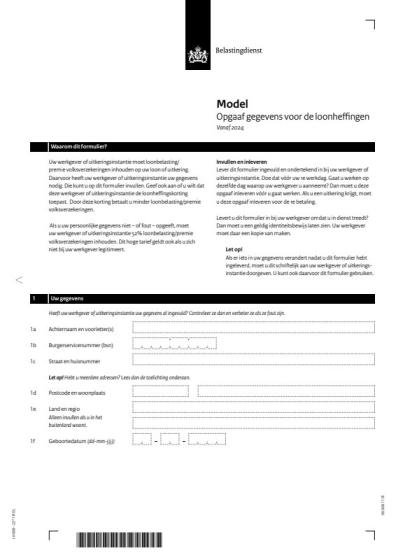
The Model opgaaf gegevens voor de loonheffingen is the Dutch payroll data statement used to collect the employee or benefit recipient details that a payer needs for loonbelasting/premie volksverzekeringen withholding. It is issued by the Belastingdienst, the Dutch Tax Administration. The official PDF currently states Vanaf 2024 and carries form code LH 008. In practice, the form is handed to a new employee, pension recipient, or benefits recipient before the first payment so the employer or benefits agency can determine which payroll tax table to use and whether payroll tax reduction should be applied.
The form is short, but each section has a distinct tax purpose. Question 1 records identity and residence data, including 1a surname and initials, 1b BSN, 1c street and house number, 1d postcode and town, 1e country and region for people living abroad, and 1f date of birth. Question 2a asks whether the payer must apply the loonheffingskorting, the combined payroll tax reduction. Question 2b asks whether the payer may apply the alleenstaande-ouderenkorting, a specific single elderly person tax credit that is only relevant in limited situations.
Although this is not an annual tax return filed directly with the tax authority by the worker, it has immediate payroll consequences. The official notes say that if personal details are missing or incorrect, or if the worker does not properly identify themself to the employer, the employer or benefits agency must withhold tax at the 52% anonymous rate. That is why the form matters even though it looks administrative: it determines whether payroll withholding starts correctly from day one.
Wie moet dit invullen?
- Employees starting a new job in the Netherlands who need to provide payroll data before the first working day, or before starting work if hired on the same day.
- People receiving a Dutch benefit, pension, or other taxable payment through a benefits agency or pension payer when that payer needs payroll tax details before the first payment.
- Workers who want to start or stop payroll tax reduction with a specific employer, pension fund, or benefits agency by completing question 2a.
- People whose personal details changed after an earlier submission, such as address, country of residence, or payroll tax reduction choice, because the Belastingdienst states that changes must be reported in writing and this same model form may be used again.
- Individuals eligible for the single elderly person tax credit who want a payer to apply it and therefore need to answer question 2b in addition to question 2a = Yes.
- Who generally does not need this exact form: workers whose employer uses its own compliant payroll data statement, rehired workers with no changes where the prior statement is still valid and re-signed, and people arranging AOW payroll tax reduction directly through the SVB online instead of through this paper model.
Waar en hoe indienen
This form is usually not sent by the worker directly to the Belastingdienst. It is handed to the employer, payroll department, pension payer, or benefits agency that will withhold Dutch payroll tax. The official Belastingdienst page instructs workers to print, sign, and submit the completed form to the employer or benefits agency. For new employment, that must happen before the first working day.
If the person is hired on the same day they start working, the form must be delivered before work begins. For benefits, it must be delivered before the first payment.
There is no central mailing address printed for routine worker submission because the destination is the payer, not the tax office. Some employers accept an equivalent digital process, but the Dutch Tax Administration says the data must be supplied on paper or digitally with a date and signature. Employers must keep the payroll data statement with their payroll records for at least 5 calendar years after the employment ends and must be able to provide it to the tax authority on request.
Zo vul je het in
- Step 1 — Question 1a to 1f, personal data: Enter your surname and initials at 1a, your BSN at 1b, your street and house number at 1c, and your postcode and town at 1d. Complete 1e country and region only if you live outside the Netherlands. Then enter your date of birth at 1f in day-month-year format.
- Step 2 — Residence review for question 1c and 1d: If you have more than one address, use the explanatory notes under the form to decide which address belongs on 1c and 1d. The official notes focus on the home that is permanently available to you and the centre of your social life, such as where you are registered, where your partner or children live, and where your children attend school.
- Step 3 — Question 2a, payroll tax reduction choice: Tick Ja, toepassen vanaf (dd-mm-jjjj) if you want this employer or benefits agency to apply the payroll tax reduction from a stated date. Tick Nee, niet (meer) toepassen vanaf (dd-mm-jjjj) if you want the payer not to apply it, or to stop applying it from a stated date. Only one employer or benefits agency may apply this reduction at a time.
- Step 4 — Question 2b, single elderly person tax credit: Answer Ja or Nee only if you qualify and only if question 2a is answered Yes. The explanatory text states that this credit forms part of the payroll tax reduction, so 2b is not completed when payroll tax reduction is not being applied.
- Step 5 — Undertekening, signature block: Enter the date in the signature section and sign in the Handtekening box. Unsigned forms are not complete because the employer must retain a dated and signed payroll statement in its records.
- Step 6 — Identity check for new employment: If you are submitting the form because you are entering employment, show a valid proof of identity to the employer. The official guidance says the employer must make a copy. Failing to identify yourself can trigger the anonymous rate even if the rest of the form is completed.
- Step 7 — Submit and update when circumstances change: Deliver the completed and signed form to the employer or benefits agency before the relevant deadline. If your details later change, submit a written update. The Belastingdienst explicitly says this same form can be used again for changes.
Belangrijke deadlines en boetes
- Before the first working day: a new employee should give the completed and signed form to the employer before starting employment.
- If hired and starting on the same day: the official form says it must be submitted before work begins on that day.
- Before the first benefit payment: a benefits recipient should submit the form before the first payment is made.
- When details change: the Belastingdienst says changes in payroll details must be communicated in writing after the original submission; no separate annual deadline is given, so changes should be reported immediately.
- Penalty or adverse consequence for missing or incorrect data: if personal details are not provided, are incorrect, or the worker does not properly identify themself, the employer or benefits agency must withhold payroll tax at the 52% anonymous rate.
- No general extension process: this is not a return with a formal extension regime. There is no standard extension request for late submission because the consequence is usually incorrect withholding rather than a postponed filing date.
- Special circumstance: if payroll tax reduction is also being received through a provisional income tax assessment or another payer, failing to stop one of them can lead to underwithholding during the year and repayment later through the annual income tax return.
Veelgemaakte fouten
- Leaving question 1b BSN blank or entering the wrong BSN: this can prevent correct payroll processing and may push the employer toward the anonymous rate if required payroll details are missing.
- Using the wrong address in question 1c and 1d: workers with both Dutch and foreign connections often enter a mailing address instead of the relevant residence address, which can lead to the wrong payroll tax table being used.
- Ticking payroll tax reduction in question 2a for more than one payer: the Belastingdienst allows it with only one employer or benefits agency at a time. Applying it twice often causes too little withholding and a tax bill later.
- Completing question 2b while question 2a is No: the explanatory text says the single elderly person tax credit is part of the payroll tax reduction, so 2b has no effect unless 2a is Yes.
- Forgetting the effective date in question 2a: both the start and stop option ask for a date. Missing dates create uncertainty about when the payroll change should take effect.
- Submitting the form unsigned in the Undertekening section: employers must keep a dated and signed statement in their records, so an unsigned form can be rejected as incomplete.
- Not showing valid proof of identity when joining a new employer: even a correctly filled form does not fix an identity check failure, and the employer may still have to apply the 52% anonymous rate.
Tips van experts
- Use the employer or benefit start date for question 2a carefully: if you want payroll tax reduction from day one, enter the actual first payment or first work date instead of leaving the date open to interpretation.
- Check whether another payer already applies payroll tax reduction: review your payslip, pension statement, or benefit statement before answering 2a. The Belastingdienst specifically warns that only one payer may apply it.
- If you receive AOW from the SVB, verify that the SVB may already apply payroll tax reduction automatically: that matters before asking an employer or pension fund to apply it as well.
- If you also receive a provisional assessment that pays out the general tax credit monthly, change or stop that assessment when you answer 2a = Yes: otherwise you may receive too much credit during the year and repay it later.
- For multiple jobs with the same employer, ask payroll whether wages are combined: the official notes say separate employments may require separate forms unless the employer combines the wages for payroll tax reduction purposes.
- Use the student and schoolchild variant when applicable: if you qualify for the studenten- en scholierenregeling, use the dedicated Belastingdienst model instead of the regular statement.
- Keep a copy of the signed form and the identity document shown: if payroll tax reduction is applied incorrectly, having your own dated copy makes later corrections much easier.
Gerelateerde formulieren
- Model Statement of data for payroll taxes — official English version of the same payroll data statement.
- Model opgaaf gegevens voor de loonheffingen (studenten- en scholierenregeling) — variant used by students and school pupils who request the student and schoolchild payroll scheme.
- Bezwaar Loonheffingen — objection form for employees, benefit recipients, and certain payroll withholding situations.
- Gageverklaring artiesten en beroepssporters — payroll withholding statement for artists and professional athletes paid under the special artists and sportspeople regime.
- Melding Loonheffingen aangifte doen voor artiesten of beroepssporters — notification form for parties that must file payroll taxes under the artists and professional athletes withholding rules.
Veelgestelde vragen
What is the Model opgaaf gegevens voor de loonheffingen used for?
It is used to give an employer, pension payer, or benefits agency the personal and tax details needed to withhold Dutch payroll tax and national insurance contributions correctly. It also records whether that payer should apply the payroll tax reduction.
Do I send this form to the Belastingdienst?
Usually no. You give it to the employer or benefits agency that pays your wages or benefit. The payer keeps it in the payroll records and may need to show it to the Belastingdienst if requested.
What happens if I do not submit the form before I start work?
The employer may have to use the anonymous rate if the required payroll details are missing when employment starts. The official form states that the anonymous rate is 52%.
Can I apply loonheffingskorting with two employers?
No. The official guidance says the payroll tax reduction may be applied by only one employer or benefits agency at a time. If two payers apply it, too little tax may be withheld and you may owe tax later.
Who should answer question 2b about the single elderly person tax credit?
Only people who qualify for that credit should answer 2b, and only when question 2a is answered Yes. It is mainly relevant for certain AOW-related situations described in the official notes.
Do I need to complete a new form if my address or payroll tax reduction choice changes?
Yes. The Belastingdienst says changes must be reported in writing after the original form was filed, and this same model may be used again to report the new details.
Can I create Model opgaaf gegevens voor de loonheffingen in bulk?
Yes. PDFengine supports bulk generation of Model opgaaf gegevens voor de loonheffingen via Excel or CSV upload — upload a spreadsheet with one row per entry and PDFengine generates all PDFs at once. You can also automate bulk creation programmatically via the PDFengine API.
Klaar om het in te vullen?
Dit formulier invullenOfficiële bronnen
- Belastingdienst: Model opgaaf gegevens voor de loonheffingen — official Dutch landing page with download and submission instructions.
- Belastingdienst PDF LH 008 — official PDF form showing the From 2024 revision, field labels, explanatory notes, and the 52% anonymous rate warning.
- Belastingdienst: Model Statement of data for payroll taxes — official English overview of the same form.
- Belastingdienst: Obtain the data required for the payroll taxes — official employer guidance on required payroll details, anonymous rate timing, and record retention.
- Belastingdienst: Loonheffingskorting toepassen of stoppen — official guidance on starting or stopping payroll tax reduction and the one-payer rule.
Meer formulieren in deze categorie
-
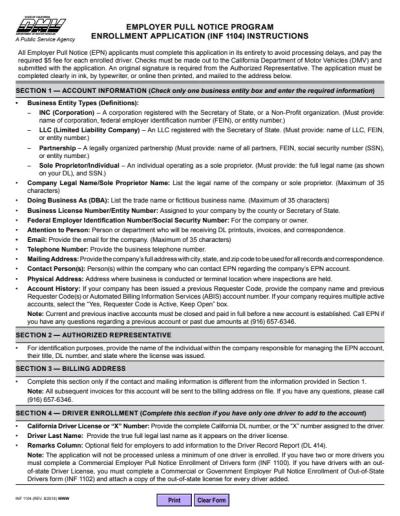 Employer Pull Notice Program Application Inf 1104Employer Pull Notice Program Application Inf 1104 — Nederlandse uitleg voor invullen en ge...
-
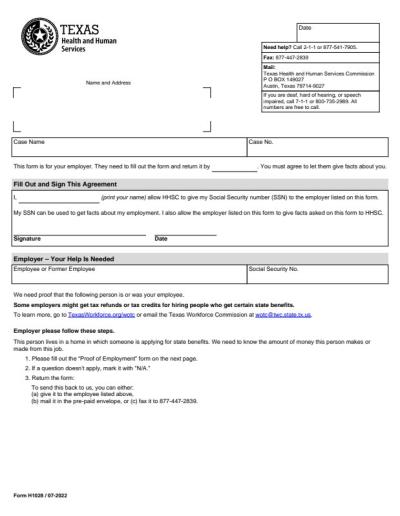 Employment Verification Form TexasEmployment Verification Form Texas — Nederlandse uitleg voor invullen en gebruik.
-
 Form W-2Wage and Tax Statement — Nederlandse uitleg
-
 ICE Form I-983Training Plan for STEM OPT Students — Nederlandse uitleg