
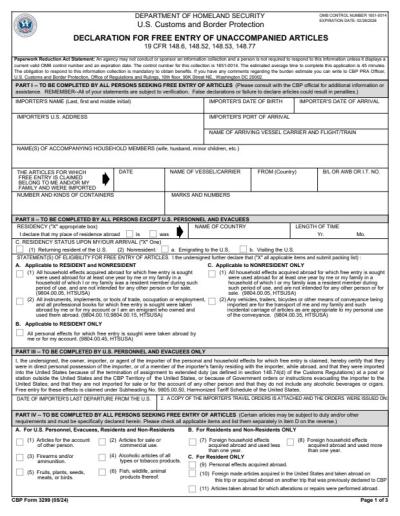
CBP Form 3299 — Declaration for Free Entry of Unaccompanied Articles, filled in online.
Official U.S. Customs and Border Protection form for claiming free entry of unaccompanied personal or household articles.
Type in the panel and watch each answer land on the page. Filling in and signing is free; downloading needs a free account, which includes 5 downloads a month.
Or fill it another way:
- Category
- Government
- Fillable fields
- 89
- Pages
- 3
- Paper size
- US Letter, 8.5 × 11 in
Five ways to fill this form.
-
Fill it in here
Type in the panel and watch it land on the form. Sign it, then download.
Free to fill and sign Start filling -
Many at once, from a spreadsheet
One row per person, one finished PDF for each.
Paid plan · you can walk through it Start with a spreadsheet -
Send it to someone to fill in
Email a link. They fill it in without an account and you get the answers back.
Paid plan · you can walk through it Send a request -
From your own software
Fill it over the API. One request returns the finished PDF.
Paid plan -
Let an AI assistant do it
Connect ChatGPT or Claude once, then describe what goes on the form.
With a free account
What is this form?
CBP Form 3299 is the declaration used by people seeking free entry of unaccompanied personal effects, household goods, or similar articles when entering or returning to the United States. It is commonly used for moves, relocations, returning residents, and situations where the traveler's property arrives separately from the traveler. The form asks CBP to evaluate whether the imported personal goods qualify for duty-free treatment, so ownership facts, travel status, shipment timing, and the nature of the articles all matter.
Because these government forms are often reused in claims, travel files, broker packets, or compliance reviews, it helps to keep the wording on the PDF aligned with the official source documents from the first draft onward. Using the original layout also makes later review easier for agencies, representatives, customs officers, lenders, or family members who expect the standard federal form and not a rewritten private template.
PDFengine preserves the official CBP layout and the real fillable fields so users can prepare a clean copy of the government form before sending it to a broker, mover, or port office. That matters on Form 3299 because it combines identity details, arrival information, shipment facts, declarations about prior use and ownership, and signature certifications that are easy to misread when handwritten. A typed version helps the traveler or relocation team compare the form against the packing inventory and shipping paperwork before CBP review.
Who needs to fill this out?
- Travelers, returning residents, and relocating individuals whose personal goods arrive separately
- Families shipping household goods to the United States as part of a move
- Moving companies, customs brokers, or relocation advisers preparing entry paperwork for a client
- People claiming that used personal articles qualify for duty-free treatment on arrival
Where and how to submit
Provide Form 3299 to U.S. Customs and Border Protection as part of the shipment entry package for your unaccompanied household or personal goods, usually through the mover, customs broker, or port processing channel handling the arrival. The form should stay with the packing inventory, bill of lading, and any immigration or residency documents that support the free-entry claim. Keep a signed copy for your own records in case CBP asks follow-up questions about ownership, timing, or the nature of the shipped articles. Keep any submission receipts, tracking confirmations, broker transmittals, or portal screenshots with the finished PDF, because many follow-up questions are really about proving what was sent, when it was sent, and which supporting documents traveled with it. If the agency later updates the form version, compare your saved copy against the new instructions before reusing earlier data. It is also smart to keep the completed PDF in the same folder as the source records you relied on, so a later correction can be made from evidence instead of memory.
How to fill it out
- Step 1 — Is and Was: Start with the identifying fields exactly as they appear in the official record for the person or shipment involved. Small mismatches here can cause the rest of the filing to be attached to the wrong case, traveler, or commercial entry.
- Step 2 — Returning Resident US: Add the main contact, location, or trip field next and compare it against the supporting documents you will submit with the form so the address, port, route, or claimant details stay consistent across the whole packet.
- Step 3 — Core details: Complete the traveler identity and arrival sections first so CBP can connect the separate shipment to the correct person and travel event. Use fields such as Emigrating To The US and Visiting The US to complete the main substance of the form before moving to the declarations.
- Step 4 — Supporting declarations: Use the article and ownership declarations carefully because free-entry treatment depends on what the goods are and how they were used. If a field does not apply, follow the official instructions rather than guessing, because agencies often reject forms that contain inconsistent answers.
- Step 5 — Importers Date Of Birth, Importers Date Of Arrival, Imported Belongings Date: Review the certification, then complete the signature and date areas only after the other entries have been checked against passports, military records, invoices, inventories, or the other source documents tied to this filing.
- Step 6 — Final review before submission: Confirm that names, dates, reference numbers, and declaration answers match the rest of your paperwork. Save a copy of the finished PDF so you can show exactly what was submitted if the agency, broker, representative, or traveler needs it later.
Frequently asked questions
When is Form 3299 used?
It is used when personal or household articles arrive separately and the traveler seeks duty-free entry treatment for them.
Does it apply only to moving households?
No. It is common for moves, but it can also apply to returning residents and other qualifying situations.
Why does prior use matter?
CBP considers whether the articles are personal effects or household goods that qualify for the claimed treatment.
Should the packing list match the declaration?
Yes. Shipment inventories and the form should tell the same story about what is being imported.
Can a broker file this with my shipment?
Often yes. Many people provide the signed form to a customs broker or mover handling the entry package.
Should I review the latest official instructions before filing?
Yes. The fillable PDF helps with accuracy, but filing rules, mailing addresses, and evidence requirements can change. A final check against the current agency instructions reduces avoidable rejections.
Can I create CBP Form 3299 — Declaration for Free Entry of Unaccompanied Articles in bulk?
Yes. PDFengine supports bulk generation of CBP Form 3299 — Declaration for Free Entry of Unaccompanied Articles via Excel or CSV upload — upload a spreadsheet with one row per form and PDFengine generates all PDFs at once. You can also automate bulk creation programmatically via the PDFengine API.
Ready to fill it in?
Fill in this formMore forms in this category
-
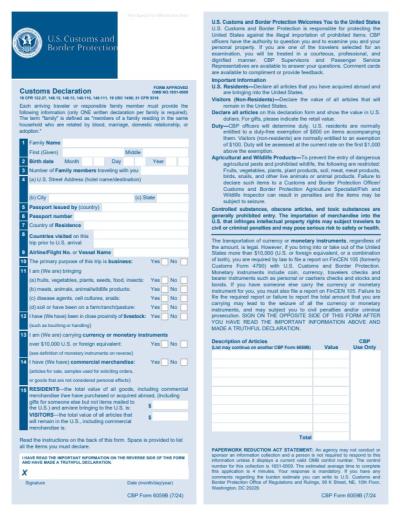 CBP Form 6059B — Customs DeclarationOfficial U.S. Customs and Border Protection arrival declaration form for travelers enterin...
-
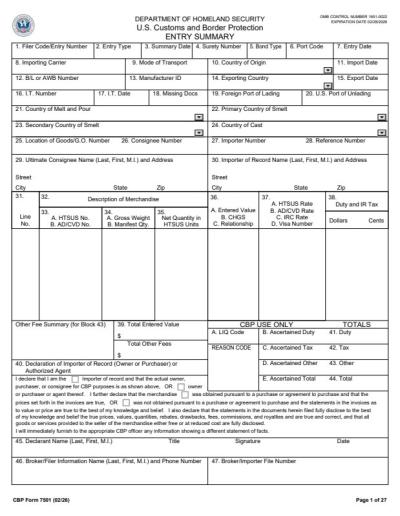 CBP Form 7501 — Entry SummaryOfficial U.S. Customs and Border Protection form used to summarize imported merchandise en...
-
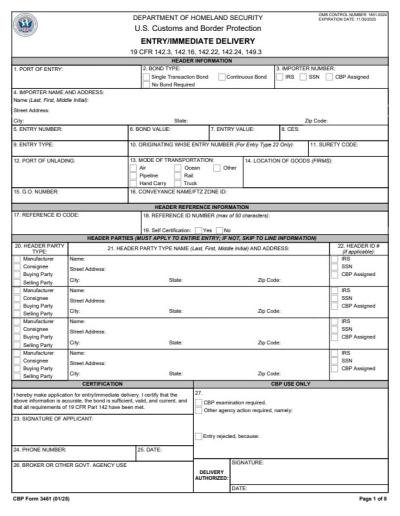 CBP Form 3461 — Entry/Immediate DeliveryOfficial U.S. Customs and Border Protection form for entry and immediate delivery of impor...
-
 CBP Form 4457 — Certificate of Registration for Personal Effects Taken AbroadOfficial U.S. Customs and Border Protection form used to register personal effects before...