
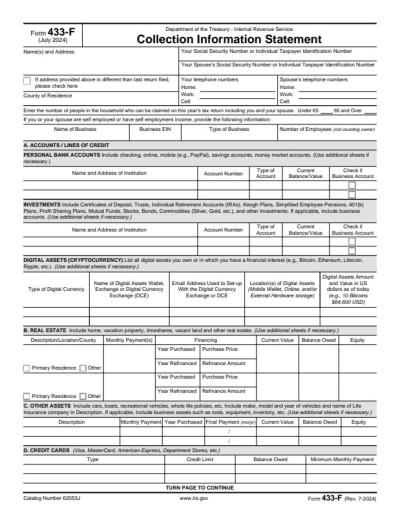
Form 433 F, filled in online.
Form 433 F — official fillable PDF form
Type in the panel and watch each answer land on the page. Filling in and signing is free; downloading needs a free account, which includes 5 downloads a month.
Or fill it another way:
- Category
- Business
- Fillable fields
- 213
- Pages
- 4
- Paper size
- US Letter, 8.5 × 11 in
Five ways to fill this form.
-
Fill it in here
Type in the panel and watch it land on the form. Sign it, then download.
Free to fill and sign Start filling -
Many at once, from a spreadsheet
One row per person, one finished PDF for each.
Paid plan · you can walk through it Start with a spreadsheet -
Send it to someone to fill in
Email a link. They fill it in without an account and you get the answers back.
Paid plan · you can walk through it Send a request -
From your own software
Fill it over the API. One request returns the finished PDF.
Paid plan -
Let an AI assistant do it
Connect ChatGPT or Claude once, then describe what goes on the form.
With a free account
What is this form?
IRS Form 433-F, Collection Information Statement, gives the IRS a current picture of a taxpayer's ability to pay an outstanding federal tax debt. It records household identity, employment or business details, bank and investment accounts, digital assets, real estate, vehicles, other property, credit, income, and necessary living expenses. The IRS uses this information when considering an installment agreement, temporary collection delay, or another collection action.
The form is a financial disclosure, not an application that automatically approves a payment arrangement. Values should be current, supportable, and consistent with bank statements, pay records, loan statements, tax returns, and public records. Joint taxpayers should include both spouses' information when requested, and self-employed taxpayers should separate business finances from household figures as the instructions require.
Use the valuation date requested by the IRS and avoid leaving a field blank merely because an asset is jointly owned, pledged, difficult to sell, or currently produces no income. Explain unusual items and distinguish gross value from the debt secured by the property. If an amount fluctuates, calculate a representative monthly average and preserve the statements used. False, incomplete, or inconsistent disclosures can delay the request and may lead to further collection action.
Review the completed disclosure from the perspective of an independent reviewer: account totals should agree with statements, loan balances should not be confused with monthly payments, and income should not be netted against expenses. Add concise explanations for one-time receipts, unusually high necessary costs, recent asset transfers, or values that cannot be verified from a standard statement.
Who needs to fill this out?
- Individuals asked by an IRS revenue officer or Automated Collection System employee to provide a Collection Information Statement.
- Taxpayers requesting or revising an installment agreement when the IRS requires financial verification.
- People seeking currently-not-collectible treatment because income does not cover allowable living expenses.
- Jointly liable spouses who must disclose combined household income, assets, and expenses.
- Self-employed taxpayers and business owners whose personal ability to pay depends on business income and assets.
Where and how to submit
Provide Form 433-F to the IRS employee, unit, fax number, or mailing address specified in the request letter or telephone instructions. Do not send it to a generic tax-return address. The response deadline appears on the notice and missing it may lead to enforced collection. Use a secure submission method approved by the IRS because the form contains sensitive financial and identity information. Keep a complete copy and proof of delivery, and be ready to provide updated statements if the IRS review occurs later.
How to fill it out
- Step 1 — Identity and contact details: Enter Name(s) and Address, County of Residence, your Social Security Number or ITIN, your spouse's number when applicable, and Home, Work, and Cell telephone numbers. Mark an address change if the address differs from the last filed return.
- Step 2 — Household and business: Enter the number of people claimed in the Under 65 and 65 and Over fields. If applicable, complete Name of Business, Business EIN, Type of Business, and Number of Employees, keeping business records ready for verification.
- Step 3 — Financial accounts: For each bank, investment, retirement, or digital-asset account, enter the Name and Address of Institution, Account Number, Type of Account, and Current Balance/Value. Mark business accounts accurately and use a recent statement date.
- Step 4 — Assets and debts: Report real property, vehicles, insurance cash values, and other assets with location, ownership, value, loan balance, and monthly payment. Use realistic market values and do not net unrelated liabilities against an asset.
- Step 5 — Monthly income: List wages, Social Security, pensions, rental receipts, child support, business distributions, and other income for both spouses. Convert irregular amounts to the monthly figure requested and retain the calculation.
- Step 6 — Monthly expenses and review: Enter housing, utilities, transportation, health, taxes, court-ordered payments, and other necessary expenses. Reconcile totals, attach requested proof, and sign only after confirming that no account, asset, income source, or liability was omitted.
Frequently asked questions
Does submitting Form 433-F guarantee an installment agreement?
No. The IRS evaluates the information, verifies selected amounts, applies collection standards, and decides what payment amount or collection treatment is appropriate.
Which documents may the IRS request?
Common support includes pay stubs, bank and investment statements, loan balances, housing bills, insurance statements, court orders, medical costs, and business financial records.
Should retirement accounts and digital assets be listed?
Yes, when the form requests them. Report current values and account details even if access is restricted or withdrawal could create tax or penalty costs.
Can actual expenses exceed IRS standards?
You should report actual expenses, but the IRS may allow only the applicable standard unless a higher necessary expense is documented and justified.
What if my finances change after submission?
Tell the assigned IRS contact about material changes and provide updated records when requested. Decisions are based on current ability to pay.
Can I create Form 433-F in bulk?
Yes. PDFengine supports bulk generation of Form 433-F via Excel or CSV upload — upload a spreadsheet with one row per form and PDFengine generates all PDFs at once. You can also automate bulk creation programmatically via the PDFengine API.
Ready to fill it in?
Fill in this formMore forms in this category
-
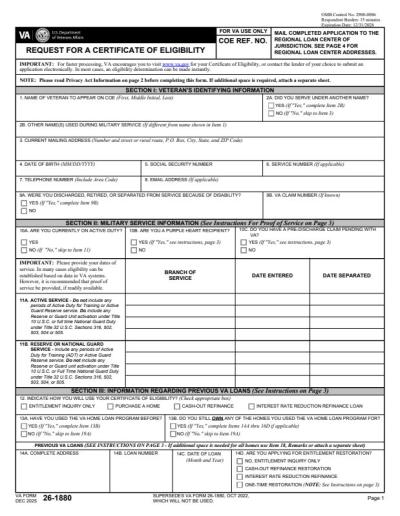 VA Form 26-1880 — Request for a Certificate of EligibilityOfficial VA home loan form used to request a Certificate of Eligibility.
-
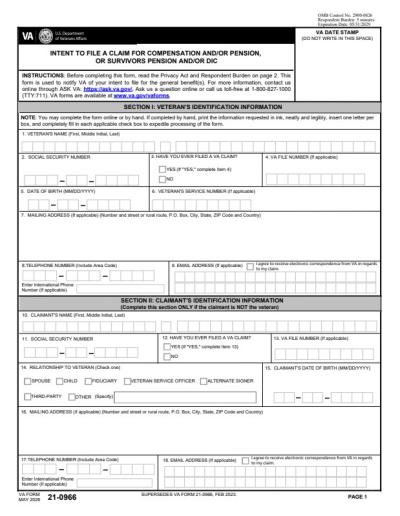 VA Form 21-0966 — Intent to File a Claim for Compensation, Pension, or Survivors BenefitsOfficial VA form used to preserve a potential effective date before filing a full claim.
-
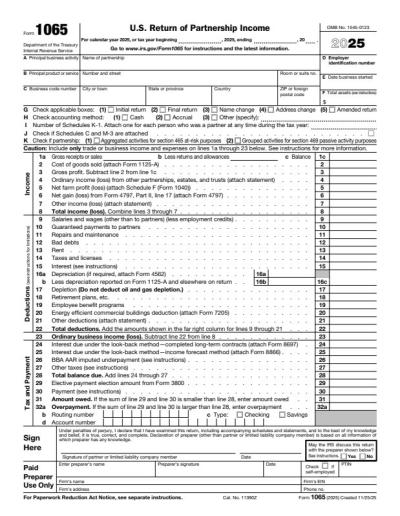 Form 1065U.S. Return of Partnership Income
-
 Form 1120U.S. Corporation Income Tax Return