
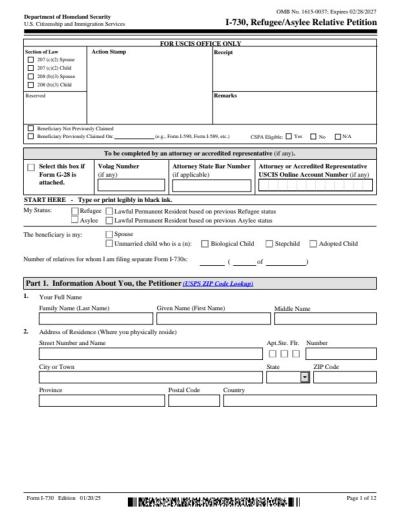
USCIS Form I-730 Refugee/Asylee Relative Petition, filled in online.
USCIS Form I-730 Refugee/Asylee Relative Petition — official fillable PDF form
Type in the panel and watch each answer land on the page. Filling in and signing is free; downloading needs a free account, which includes 5 downloads a month.
Or fill it another way:
- Category
- Legal
- Fillable fields
- 267
- Pages
- 12
- Paper size
- US Letter, 8.5 × 11 in
Five ways to fill this form.
-
Fill it in here
Type in the panel and watch it land on the form. Sign it, then download.
Free to fill and sign Start filling -
Many at once, from a spreadsheet
One row per person, one finished PDF for each.
Paid plan · you can walk through it Start with a spreadsheet -
Send it to someone to fill in
Email a link. They fill it in without an account and you get the answers back.
Paid plan · you can walk through it Send a request -
From your own software
Fill it over the API. One request returns the finished PDF.
Paid plan -
Let an AI assistant do it
Connect ChatGPT or Claude once, then describe what goes on the form.
With a free account
What is this form?
USCIS Form I-730 Refugee/Asylee Relative Petition is an official form issued by U.S. Citizenship and Immigration Services (USCIS). It is used to request derivative refugee or asylee status for a qualifying spouse or unmarried child. The fillable PDF on PDFengine lets you enter the requested information in the form’s existing fields and download a clean copy for review, signature, and submission. PDFengine does not decide eligibility, calculate an official outcome, or file the form for you. Always compare the completed PDF with the current official instructions and edition before you send it.
Prepare from source records rather than memory. Names, identification numbers, addresses, dates, amounts, and selected answers should match the documents that support the filing. A PDF can look complete while still being rejected because the wrong person signed it, an attachment is missing, a calculation uses the wrong period, or a response conflicts with another record. Save the unedited source documents and a copy of the exact version you submit. If an item does not apply, follow the form instructions instead of inventing a value; a blank field, zero, and “not applicable” can have different legal or administrative meanings.
Who needs to fill this out?
- principal refugees and asylees petitioning for eligible relatives, qualifying spouses or children, and representatives assembling follow-to-join evidence.
- Authorized attorneys, accredited representatives, tax professionals, preparers, or organizational staff completing the form with permission.
- Reviewers who need a legible draft before the form is signed and delivered.
- Recordkeepers producing several consistent copies from verified spreadsheet or case data.
Before starting, confirm that USCIS Form I-730 Refugee/Asylee Relative Petition is the exact form requested for the transaction, tax year, benefit, license, or case. Check the edition date and the official eligibility rules. Assign one person to reconcile the answers when several people contribute information, and do not treat PDFengine’s technical ability to populate a field as proof that an answer is legally sufficient. Sensitive personal, financial, immigration, vehicle, or identity data should be shared only with people and systems authorized to handle the filing.
Where and how to submit
File through the USCIS channel and location listed in the current Form I-730 instructions. Include relationship evidence, identity documents, photographs, translations, and any required supplemental pages; do not send the form to an address copied from an old edition. Submission addresses, portals, fees, deadlines, and accepted signature methods can change, so verify them on the issuer’s official website immediately before delivery. Do not rely on an address printed on an obsolete copy or a third-party summary. If the form belongs with another application or return, submit the complete package in the order requested and include only the evidence relevant to the case.
Keep the completed PDF, all attachments, calculations, source records, and proof of mailing or electronic acceptance for the applicable retention period. Track any receipt or confirmation number and respond to a deficiency notice using the issuer’s stated channel. If the recipient returns the form for correction, preserve the originally submitted copy and document what changed. Protect stored and transmitted files with appropriate access controls because USCIS Form I-730 Refugee/Asylee Relative Petition may contain information that can be used for identity theft, financial fraud, or unauthorized access to a case.
How to fill it out
- Step 1 — My Status: Enter the identifying information exactly as it appears in the primary record used for this filing. Check spelling, punctuation, and any number or date format printed on the form.
- Step 2 — The beneficiary is my: Complete this field from the corresponding official document. Do not abbreviate a legal name or substitute an informal value when the instructions ask for the recorded value.
- Step 3 — Petitioner Family Name (Last Name): Provide the requested address, identifier, amount, status, or category and verify it against the supporting record. Review every character before moving on.
- Step 4 — Information About Your Relative: Work through the related fields as one section. Keep amounts, dates, selections, and explanations consistent with each other and with any schedule or attachment.
- Step 5 — Relationship and eligibility details: Complete the remaining eligibility, calculation, history, or supporting-information fields. Use extra pages only in the format allowed by the official instructions.
- Step 6 — Petitioner signature and date: Review the certification language, then add every required signature and date in the accepted format. A preparer’s entry does not replace the applicant’s or authorized signer’s certification.
After completing the steps, inspect the generated PDF at normal size and at high zoom. Confirm that long entries are not clipped, checkboxes or radio buttons show the intended choice, continuation pages are attached, and no required field was skipped. Recalculate totals independently where the form contains financial amounts. If you correct an answer, regenerate or clearly amend the complete filing rather than sending conflicting versions.
Frequently asked questions
Can PDFengine determine whether I qualify to use USCIS Form I-730 Refugee/Asylee Relative Petition?
No. PDFengine helps populate the PDF, but eligibility and filing requirements come from U.S. Citizenship and Immigration Services (USCIS). Read the current official instructions or obtain qualified advice for a fact-specific question.
Do I need to complete every field?
Complete every field required for your situation. Follow the printed instructions for optional or inapplicable items; do not add placeholder answers merely to remove a blank.
What should I check before submitting?
Reconcile names, identification numbers, dates, amounts, selected options, attachments, and signatures against the source records. Then inspect the final PDF for clipped text, blank required fields, duplicate selections, and pages in the wrong order.
Can I use an electronic signature?
Only when U.S. Citizenship and Immigration Services (USCIS) and the receiving channel accept it for this filing. A typed name is not automatically equivalent to a valid signature, and some submissions require an original, witnessed, notarized, or representative signature.
What if I discover an error after filing?
Follow the issuer’s correction, amendment, or replacement procedure and refer to the original receipt or case when instructed. Keep both versions and a short record of the correction.
Should I keep a copy of the completed form?
Yes. Keep the exact submitted version, supporting records, and delivery confirmation for the retention period that applies. Store the files securely because the form may contain sensitive information.
Can I create USCIS Form I-730 Refugee/Asylee Relative Petition in bulk?
Yes. PDFengine supports bulk generation of USCIS Form I-730 Refugee/Asylee Relative Petition via Excel or CSV upload — upload a spreadsheet with one row per form and PDFengine generates all PDFs at once. You can also automate bulk creation programmatically via the PDFengine API. Each generated form must still be individually reviewed and, where required, signed.
Ready to fill it in?
Fill in this formMore forms in this category
-
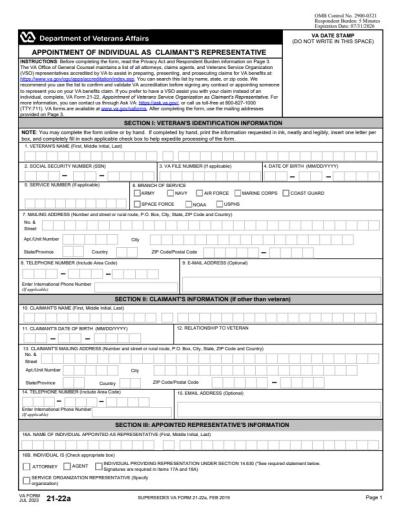 VA Form 21-22a — Appointment of Individual as Claimant's RepresentativeOfficial VA form used to appoint an individual representative such as an attorney, agent,...
-
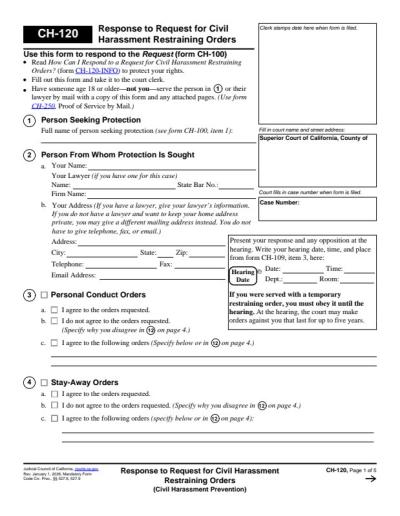 CH-120 Response to Request for Civil Harassment Restraining OrdersCH-120 Response to Request for Civil Harassment Restraining Orders is the official fillabl...
-
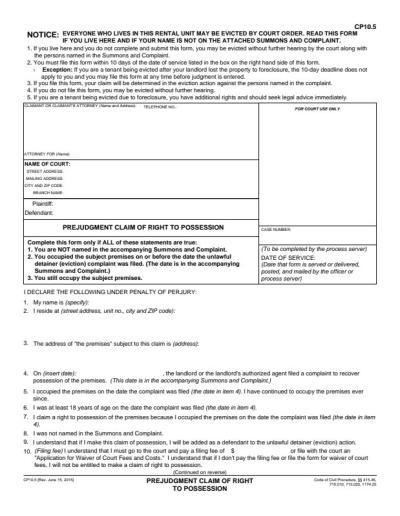 CP10.5 Prejudgment Claim of Right to PossessionCP10.5 Prejudgment Claim of Right to Possession is the official fillable form from Judicia...
-
 FL-341(C) Children's Holiday Schedule AttachmentFL-341(C) Children's Holiday Schedule Attachment is the official fillable form from Judici...