
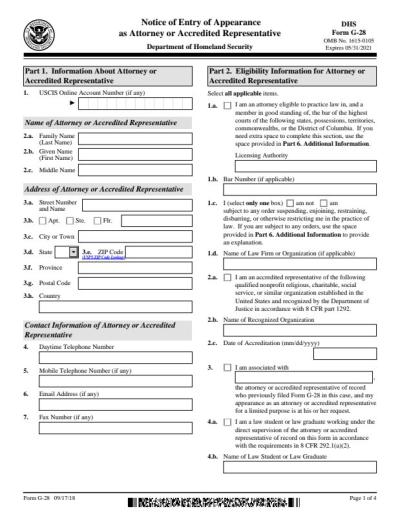
USCIS Form G-28, filled in online.
Notice of Entry of Appearance as Attorney or Accredited Representative
Type in the panel and watch each answer land on the page. Filling in and signing is free; downloading needs a free account, which includes 5 downloads a month.
Or fill it another way:
- Category
- Legal
- Fillable fields
- 93
- Pages
- 4
- Paper size
- US Letter, 8.5 × 11 in
Five ways to fill this form.
-
Fill it in here
Type in the panel and watch it land on the form. Sign it, then download.
Free to fill and sign Start filling -
Many at once, from a spreadsheet
One row per person, one finished PDF for each.
Paid plan · you can walk through it Start with a spreadsheet -
Send it to someone to fill in
Email a link. They fill it in without an account and you get the answers back.
Paid plan · you can walk through it Send a request -
From your own software
Fill it over the API. One request returns the finished PDF.
Paid plan -
Let an AI assistant do it
Connect ChatGPT or Claude once, then describe what goes on the form.
With a free account
What is this form?
Form G-28 is the USCIS appearance form used when an attorney or accredited representative enters a case before USCIS. It identifies the representative, the client, contact preferences, eligibility to appear, and signatures that authorize communication and document routing in the immigration matter. On PDFengine, this template is presented as a fillable PDF that keeps the official government layout while making the document easier to complete, review, and store digitally.
That matters because USCIS Form G-28 is rarely a standalone note. It usually sits inside a larger court, immigration, or veterans-benefits workflow where names, dates, classification choices, provider details, monetary figures, and signatures must line up with supporting evidence. Using the mapped AcroForm fields reduces retyping, makes internal review easier, and helps produce a cleaner final PDF for filing or recordkeeping.
In practice, many people do not complete this kind of form in one sitting. They gather identifiers first, then confirm facts against notices, agency letters, medical records, court papers, or employer documents. A structured fillable PDF makes that workflow easier because the same draft can be reviewed, corrected, saved, and reused without changing the official layout that the receiving agency expects.
That is also useful when the person completing the form is not the only reviewer. A lawyer, paralegal, HR manager, veteran service officer, family member, or translator may all need to check the same draft before it is submitted. Keeping the official format intact reduces confusion and makes it easier to compare each answer with the rest of the supporting file.
Who needs to fill this out?
- Attorneys entering an appearance in a USCIS case
- Accredited representatives working on eligible immigration matters
- Applicants and petitioners who want USCIS to communicate through counsel
- Law offices assembling a complete filing packet with representation paperwork
- International users, advisers, or back-office teams who need a clean English-language copy of the official USCIS Form G-28 before filing
Where and how to submit
Include Form G-28 with the USCIS application, petition, appeal, or request for which representation is being entered. Keep the final PDF with the signed client authorization, the principal filing, and proof of representative eligibility because USCIS uses G-28 to decide who receives notices and may discuss the case.
Even when the form is prepared outside the United States, it remains a U.S. federal document. Keep the English names, official identifiers, and dates exactly as they appear in the source records, and preserve the finished PDF together with the rest of the filing package so later reviews, follow-up requests, or amendments can trace the original submission cleanly.
It is also smart to keep a working copy before filing and a final copy after filing. That makes it easier to answer follow-up questions, compare agency notices against the original submission, and prove later which version of the form was actually sent.
How to fill it out
- Step 1 — Confirm the filing context: Start with PDF417BarCode1[0] and confirm you are working on the correct case, claim, petition, or benefits request before entering data.
- Step 2 — Complete identifying details: Fill fields such as Line4 DaytimeTelephoneNumber[0] with the exact names, numbers, and identifiers shown in the underlying records.
- Step 3 — Add the main party or benefit details: Use entries like Pt1Line2c MiddleName[0] and Pt1Line2b GivenName[0] to capture the core facts of USCIS Form G-28. Match the wording to source documents instead of paraphrasing.
- Step 4 — Review selection fields and classifications: Check boxes or structured fields such as Pt1Line2a FamilyName[0] carefully so the selected filing basis, case status, or benefit category is consistent with the packet.
- Step 5 — Finish narrative or supporting entries: If the form includes a text or explanation field such as Pt1Line1 USCISOnlineAcctNumber[0], use it to clarify dates, providers, counts, conditions, or other facts that support the filing.
- Step 6 — Validate before submission: Compare the final PDF with supporting letters, evidence, notices, identity records, and payment details so the official form matches the rest of the file before it is sent.
Frequently asked questions
When is Form G-28 needed?
It is used when an attorney or accredited representative is entering an appearance before USCIS in a specific matter.
Does one G-28 cover every future case?
No. Representation is generally tied to the specific matter or filing it accompanies.
Why are client signatures required?
Because USCIS needs written authorization showing that the client has approved the representation.
Can G-28 change where USCIS sends notices?
Yes. The form helps determine communication and notice routing for the case.
Should counsel keep a signed copy?
Yes. A retained signed copy is useful if USCIS questions representation or notice delivery.
Should I keep a copy before filing?
Yes. A saved pre-filing copy and a final filed copy make later review, corrections, and follow-up questions much easier.
Can I create USCIS Form G-28 in bulk?
Yes. PDFengine supports bulk generation of USCIS Form G-28 via Excel or CSV upload — upload a spreadsheet with one row per form and PDFengine generates all PDFs at once. You can also automate bulk creation programmatically via the PDFengine API.
Ready to fill it in?
Fill in this formMore forms in this category
-
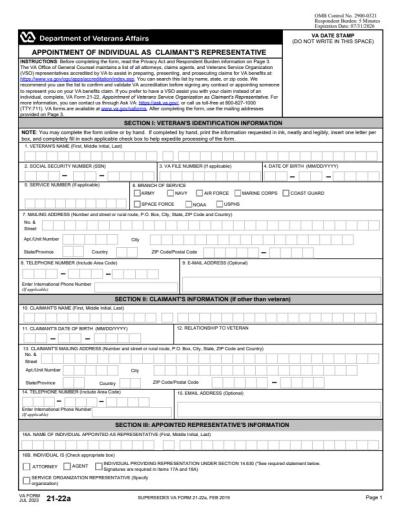 VA Form 21-22a — Appointment of Individual as Claimant's RepresentativeOfficial VA form used to appoint an individual representative such as an attorney, agent,...
-
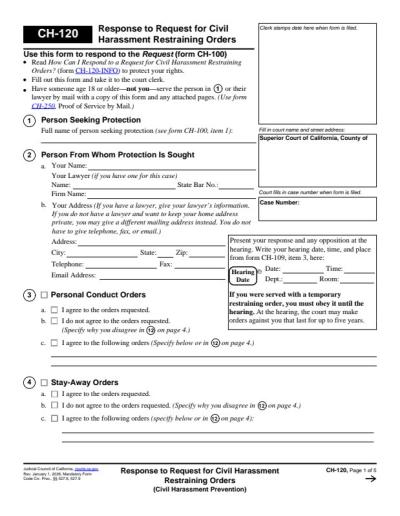 CH-120 Response to Request for Civil Harassment Restraining OrdersCH-120 Response to Request for Civil Harassment Restraining Orders is the official fillabl...
-
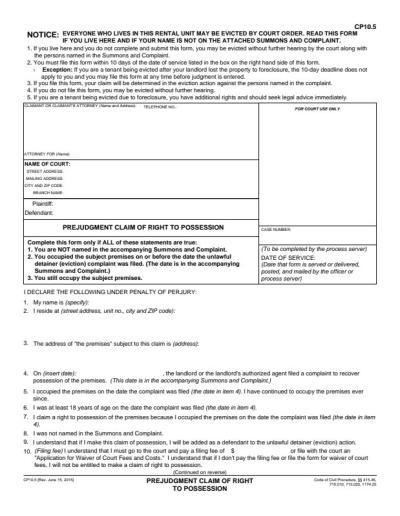 CP10.5 Prejudgment Claim of Right to PossessionCP10.5 Prejudgment Claim of Right to Possession is the official fillable form from Judicia...
-
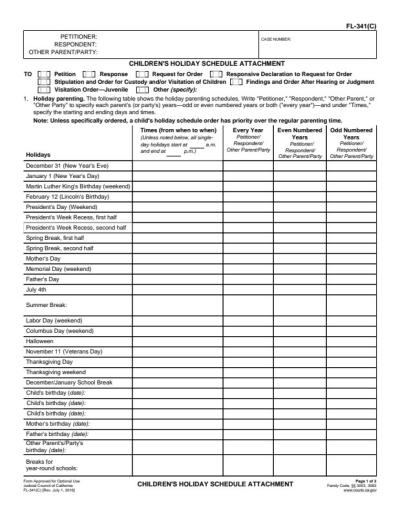 FL-341(C) Children's Holiday Schedule AttachmentFL-341(C) Children's Holiday Schedule Attachment is the official fillable form from Judici...